stable and pasture
Only a healthy animal belongs on the pasture and must be prepared for it.
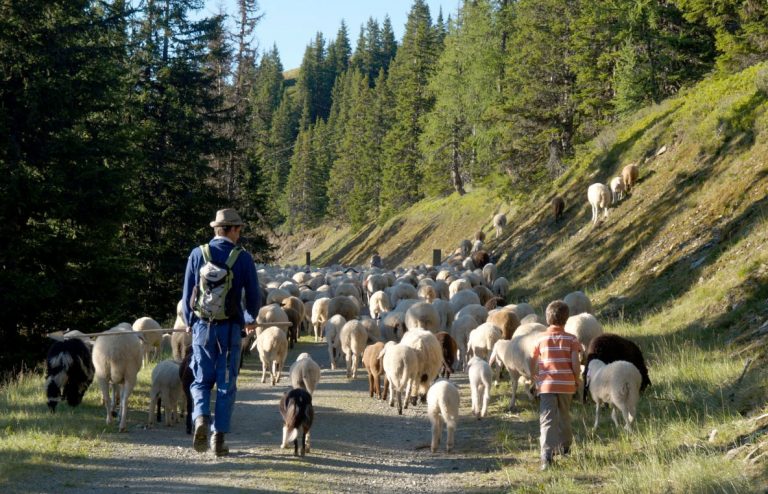
This includes:
- suitable stature and robustness
- healthy, well-groomed hooves
- deworming
- after winter - acclimatization to pasture and fresh pasture feed
- Completion of necessary vaccinations
- Planning lactation or avoiding births on the alpine pasture
All related measures fall under the umbrella term herd management. This describes the active, daily, and comprehensive care of a herd. It encompasses activities that take place directly with or for the animals and also determines the composition of a herd for a specific pasture. This ensures the animals remain healthy and can perform at their best. The necessary decisions help maintain the animals' productivity and implement herd protection measures (targeted grazing management, pens, paddocks, etc.).
Livestock protection – considerations for the grazing season
- Composition of the herd, selection of animals – according to age, sex of the livestock, status (mother, young, pregnant…)
- Determining the timing of births – At what age does an animal go to pasture or alpine meadow?
- Planning for a transition phase from stable feed to fresh meadow feed
- Avoiding births outdoors or in the pasture
- Ensuring rapid care and quick removal of injured/accident animals
Young animals, such as lambs or calves, are more vulnerable to predators and require greater protection. Each category of grazing animal has different requirements regarding pasture and, above all, energy needs. These are all aspects that must be considered in pasture management.
Herd management allows me to control my herd, while pasture management encompasses all measures for the care and maintenance of pastureland. The goal is to maintain a suitable pasture that can adequately feed my animals in the long term, thus continuing the efforts of herd management.
Just as herd management aims at animal welfare, pasture management is geared towards maintaining healthy vegetation for the grazing animals. Decisions made in herd management have a direct impact, for example, through the composition of the herd. The challenges of targeted pasture management include keeping animals in close proximity within a herd. Housing animals in pens must be considered when maintaining pastureland, for example, when choosing the location of a pen.