corral paddock
targeted grazing management
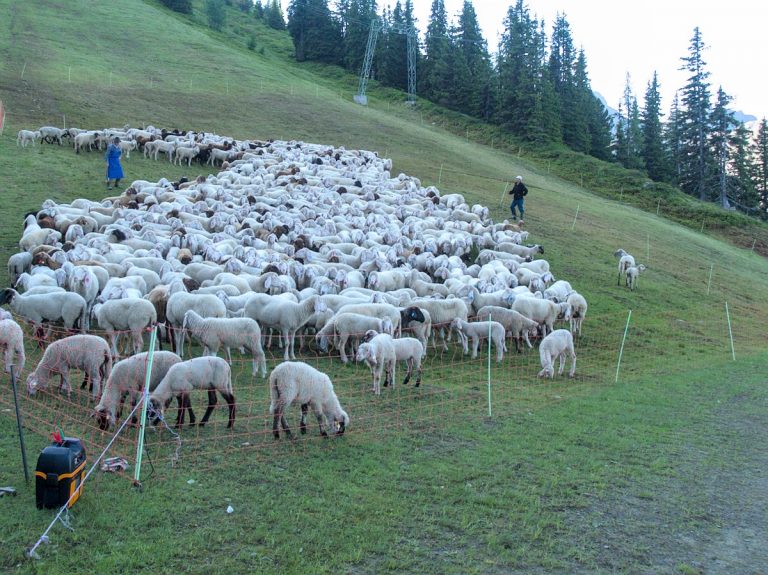
The methods used to keep livestock on pastures range from free grazing to the use of corrals at night, to grazing with shepherds and livestock guardian dogs. The grazing method determines how, when, what, where, and how much the animals can graze.
Decisions made regarding herd management and the pressure from predators in the region limit the available options. Herd protection is most easily implemented through targeted grazing management, overnight enclosures and supervision, or paddock grazing, supported by livestock guardian dogs if necessary.
Targeted grazing management The available grazing area is divided into sections. These are used in stages by the compactly kept animals.
This achieves the following:
- Easier control of grazing animals
- Less widespread distribution of the animals with better herd overview.
- Spatially clearly defined grazing area, the grazing of which can be ensured.
- Targeted improvement of pasture quality, less weed and shrub encroachment – keeping the areas open
- Even use of the pastureland, adapted to the location and needs of the animals
- Possibility of implementing certain herd protection measures
Targeted grazing management is achieved with herders or through temporary supervision, supported by fences and natural boundaries. The central point is keeping the herds compact. At night, the animals are brought into a pen for protection.
A pen It serves as a temporary enclosure for the herd during rest periods. Temporary use, such as for midday or nighttime rest, reduces the need for feed intake. The small size makes it easier to monitor the animals, and the construction effort remains minimal. For hygienic reasons, pen locations should be changed regularly and, depending on their condition, should not be used again until the next grazing season at the earliest.
The size of the pen must be adapted to the herd size, and its boundaries must meet the standards of technical herd protection. If a pen is not only used at night (e.g., during bad weather), approximately 251 TP3T of the daily feed requirement should be able to be consumed in the pen, depending on the duration of stay.
paddock
Livestock protection is not limited to alpine pastures; home pastures and valley pastures must also be protected.
Paddocks are suitable for this.
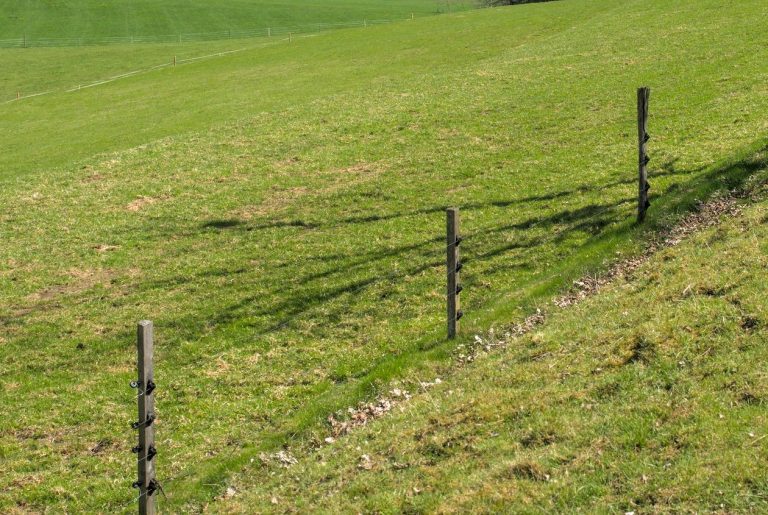
Herd protection is not limited to alpine pastures; home and valley pastures also need protection, and paddocks are suitable for this purpose.
A paddock serves as a grazing area for extended periods and, with proper care, can be used permanently. For maintenance purposes, the animals can be kept in a specific part of the paddock by temporarily dividing it. The paddock fencing must meet the standards for technical livestock protection.
On pastures at higher altitudes or on alpine meadows with suitable sections, a combination of targeted grazing management with pens in difficult-to-access areas and grazing in more favorable areas can be implemented. Grazing towards the end of the grazing season has the advantage that remaining forage is used more efficiently and the animals are available for the descent to the higher pastures.