shepherd
In contrast to shepherd, “herding” and the associated “herdsman” are mainly used for the Alpine region.
The Shepherd
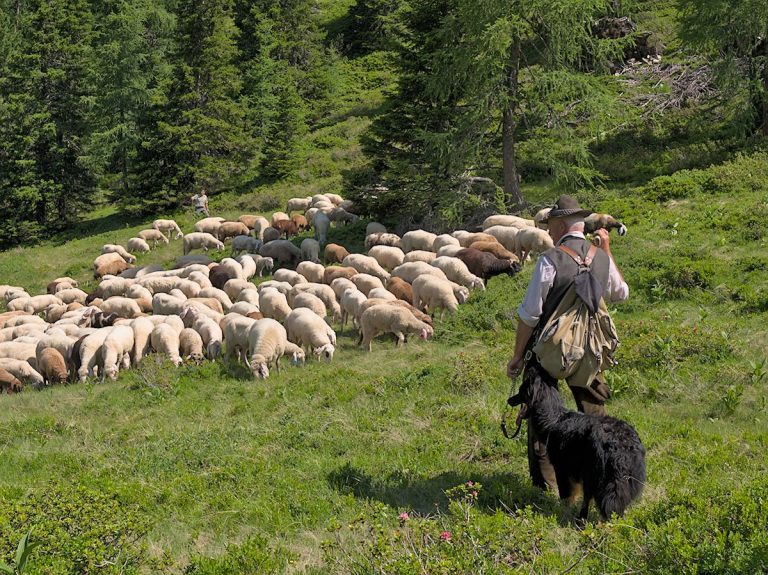
- checks and cares for the herd entrusted to him, ideally on a daily basis.
- is responsible for the welfare of its animals.
- uses available pastureland in such a way that it is preserved in the long term.
- monitors the feed supply and ensures the maintenance of the pastures.
Herding without further measures does not offer any protection against attacks by predators, but it does create the best conditions for implementing herd protection measures. The aim is for herders to implement targeted grazing management. This lays the foundation for animal control and monitoring of health, sustainable and optimal use of grazing areas and protection of the herd from predators.
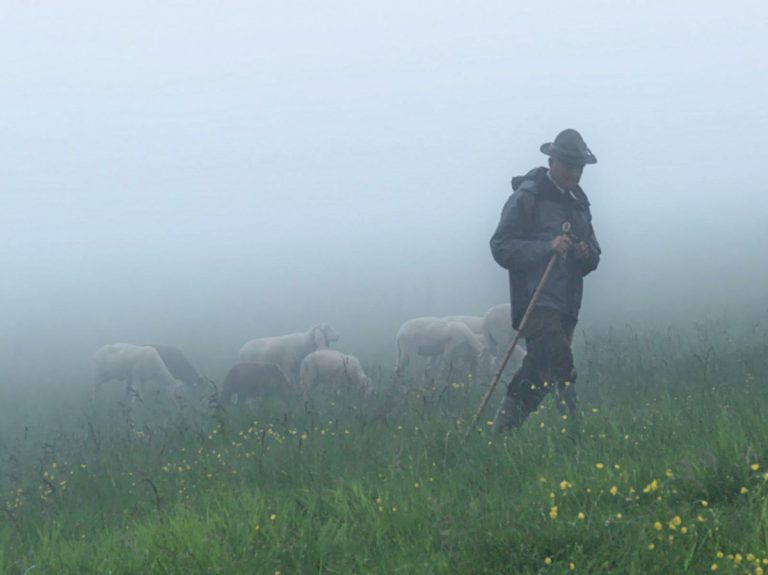
When large predators are present in the area, the demands on shepherds increase. This is a major challenge, particularly in bad weather with poor visibility, and mistakes in herding can lead to losses. Animal control and pasture management require even more care and discipline. In any case, a shepherd does more than just check from home whether the animals are in a certain area or need to be provided with minerals. To carry out his tasks, the shepherd needs an alpine hut in which he can live.
tasks in detail
- animal care
- Animal Health – Emergency Care
- herd management – animal observation
- Pasture management – care of pastures
- Control of animals – control of duration and location of feed intake
- Protection of animals: pens, paddocks, stables – measures for herd protection
- Maintenance of infrastructure (water supply, paths, fences, buildings...)
- Interface between alpine pasture managers, herders and other (alpine) users (leisure use), communication – priority for agricultural use
- Documentation of use (use, funding requirements, animal health, weather phenomena, special features...)
- Coordination of alpine staff, in cooperation with the alpine pastor, depending on the position of the shepherd himself
Requirements for Shepherds
- Knowledge about his livestock: biology, principles of animal health, diseases, injuries and their care, up to professional euthanasia (part of herd management)
- Familiar with handling farm animals
- Knowledge of pasture management, pasture leadership
- Knowledge about pasture and cover feed requirements
- Knowledge of fodder plants, poisonous plants
- Dealing with dogs (both herding and livestock guardian dogs)
- Knowledge of large predators (biology and behavior, as a basis for herd protection)
- Fence construction in general (types of fences, areas of application, advantages and disadvantages, professional construction)
- herd protection
- knowledge of his rights and obligations (current legal situation)
- Physically fit, sure-footed
- Mentally agile
- Mentally resilient
- Extensive knowledge of alpine terrain, weather phenomena, alpine hazards
- Able to assess situations, decisive
- Communicative
The Shepherd – a proven instrument with future potential
- Social and economic developments in the 20th century made pasture and alpine farming no longer lucrative.
- Personnel in agriculture became fewer and more expensive
- Productivity increases through the breeding of high-performance breeds displaced pasture in favor of concentrated feed
- Negative effects of this and increased sensitivity to environmental protection in society have led to increasing demands on agriculture
- Grazing as a site-adapted, more extensive form of agricultural use can contribute to the preservation of the cultural landscape, the water balance and climate protection and is therefore of great social importance
- This requires traditional tools such as the shepherd to ensure continuous animal care and to ensure sustainable use while guaranteeing animal welfare.
- Site-adapted management contributes significantly to the preservation of important natural services, the preservation of which benefits all people.
- Agriculture takes place in and with nature and lives from it. The shepherd is on the pasture with his animals and plays a central role.